
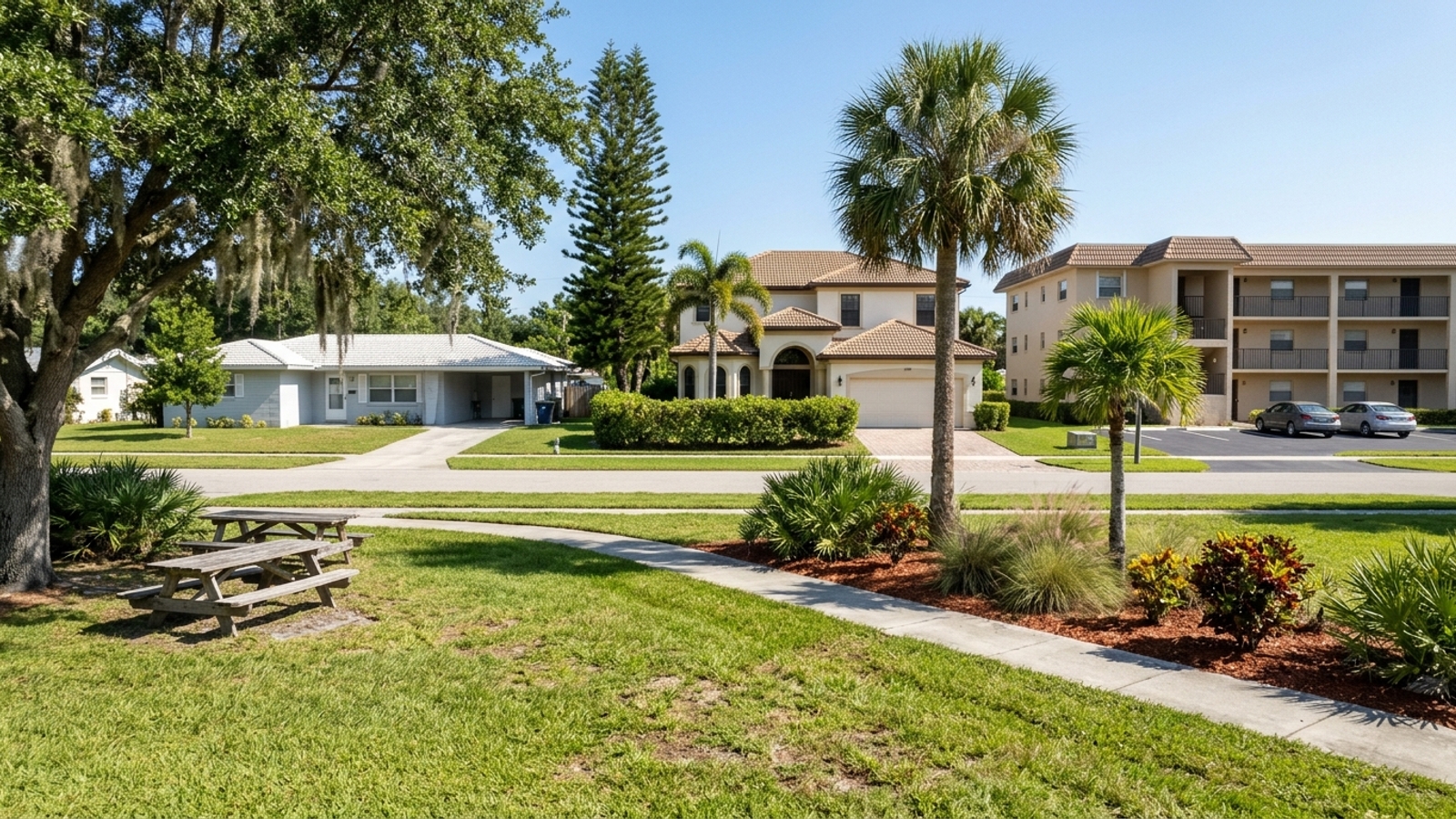
Fort Myers currently has 667 homes in inventory, giving buyers 6.4 months of supply. The pressure to waive inspections and bid over asking has cooled considerably. You have room to negotiate, but you’re also walking into a market with a complex set of local regulations covering flood zones, structural inspections, and insurance costs.
Choosing a buyer’s agent here means finding someone who can evaluate those property-specific risks before you submit an offer. The right agent pulls elevation certificates, reads condo reserve studies, and negotiates repairs based on concrete data.
Key Takeaway
Choose a Fort Myers buyer’s agent for negotiation and due diligence, not speed. With 6.4 months of supply across all home types (90 days ending Sept 30, 2026), buyers have room to negotiate price, repairs, and terms. If you plan to buy a condo, pick the agent who can read association financials and milestone-inspection reports, and if you want a house, pick the one who checks flood zones and insurance costs before you write an offer.
Who This Guide Is For
You are planning to buy a home in Fort Myers and are deciding which buyer’s agent to interview, hire, and sign a written agreement with.
What a Fort Myers Buyer’s Agent Should Do for You in This Market
In Fort Myers, only 2.6% of all homes sold above list, and condos sat a median 98 days (90 days ending Sept 30, 2026). The buyer’s agent worth hiring is the one who negotiates a price gap and vets association finances, flood exposure, and insurance for your property type, not the one who promises to win bidding wars.
For the bigger picture, see Buying a Home in Fort Myers.
Your agent’s job description shifts depending on what you want to buy. The risks and negotiation tactics for a high-rise condominium look entirely different from those for a single-family house near the water. Structure your agent interviews around the specific type of home you plan to purchase.
Why Negotiating Skill Matters More Than Speed
Across all Fort Myers homes, the median sale-to-list ratio is 95% (90 days ending Sept 30, 2026). On a $350,000 asking price, that ratio lands around $332,500. That’s a $17,500 gap that a buyer’s agent’s pricing analysis has to justify to the seller.
A strong agent builds that justification using comparable sales, the days on market for the specific listing, and the property’s price-reduction history. They present a case for the lower price rather than just throwing out a low number. The downside is that a median hides the well-priced homes that still sell quickly near asking, so an agent who lowballs everything can lose you the right house.
Why Condo Purchases Need Extra Diligence
Condo buyers currently have the most negotiating power in the city, with units selling at 93.5% of asking and 7.5 months of supply (90 days ending Sept 30, 2026). Florida’s post-Surfside condo rules mean the real cost of a unit often sits hidden in the association’s books. Your agent needs to read inspection and reserve reports, not just the list price, to understand your total costs.
Florida condos taller than three stories must complete milestone structural inspections and structural integrity reserve studies. Finding a funding gap in those documents gives you room to ask for price cuts or credits from the seller. A discount on the unit can be wiped out by a special assessment the association has already planned, though, meaning the advantage is only real after the documents are reviewed.
Why Single-Family Buyers Face Firmer Sellers
Single-family prices are still rising, with the median sale price up 8.2% year over year alongside 5.4 months of supply (90 days ending Sept 30, 2026). Buyers should expect less room to negotiate on the list price and more focus on repairs, insurance-driven credits, and closing terms. The agent’s value shifts toward inspection negotiation and flood and insurance homework.
An agent representing a single-family buyer has to confirm the home’s flood zone and check permit histories for past storm damage. They also need to know which roof conditions will trigger an insurance rejection before you pay for an appraisal. Firmer prices don’t cover flood insurance or roof-age costs, so an agent focused only on the purchase price can leave you with a home you can’t insure affordably.
Fort Myers Housing Market at a Glance
The figures below show the state of the local market for the 90 days ending September 30, 2026. Keep these numbers in hand when you interview agents, and ask each candidate to interpret what they mean for your budget.
- All homes: median sale price $330,842, up 3.7% year over year; 319 homes sold; $206 median price per square foot (90 days ending Sept 30, 2026)
- All homes: median 81 days on market; 95% sale-to-list; 2.6% sold above list; 6.4 months of supply; 667 homes in inventory (90 days ending Sept 30, 2026)
- Single family: median sale price $439,825, up 8.2% year over year; 153 sold; $232 median price per square foot (90 days ending Sept 30, 2026)
- Single family: median 66 days on market; 95.9% sale-to-list; 3.3% sold above list; 5.4 months of supply; 273 in inventory (90 days ending Sept 30, 2026)
- Condo: median sale price $256,474, down 6.7% year over year; 106 sold; $187 median price per square foot (90 days ending Sept 30, 2026)
- Condo: median 98 days on market; 93.5% sale-to-list; 1% sold above list; 7.5 months of supply; 261 in inventory (90 days ending Sept 30, 2026)
- Townhouse: median sale price $276,003, up 2.2% year over year; 59 sold; $177 median price per square foot (90 days ending Sept 30, 2026)
- Townhouse: median 60 days on market; 95.3% sale-to-list; 3.4% sold above list; 5.7 months of supply; 111 in inventory (90 days ending Sept 30, 2026). Source: Redfin data.
Florida Rules to Know Before You Hire a Buyer’s Agent
Before you start touring homes or signing paperwork, you need to understand how real estate representation works under state law. Florida has specific rules governing brokerage relationships, written agreements, and compensation.
These regulations protect you from agreeing to terms you don’t fully understand. Ask every agent you interview how they handle these legal requirements in their daily practice.
Single Agent vs. Transaction Broker
In Florida, a licensee is presumed to be a transaction broker unless a single-agent or no-brokerage relationship is set up in writing. A transaction broker provides a limited, non-fiduciary form of representation to a buyer, seller, or both. If you sign as a single-agent customer, the agent owes you fiduciary duties including loyalty, confidentiality, and full disclosure.
Ask every agent which relationship they’ll work under and get that commitment in writing. A single agent relationship may be changed to a transaction broker relationship later only with your prior written consent. A transaction broker owes limited confidentiality and no duty of loyalty, so if you want an advocate, you have to ask for single-agent status explicitly.
The Written Buyer Agreement Required Since August 2024
Since August 17, 2024, MLS participants working with buyers must have a written agreement before touring a home. This agreement must state the compensation, which must be disclosed conspicuously as fully negotiable and not set by law. You and the agent must agree on these terms before you step inside a property.
Read this agreement at your first sit-down meeting with the agent, not while you’re standing at a front door. Signing at the first showing under time pressure is when buyers agree to terms they haven’t compared, such as length and exclusivity.
How Buyer’s Agent Compensation Works
Compensation is fully negotiable and is set directly in your buyer agreement. While you agree to a specific amount or percentage, a seller may still offer concessions or agree to pay your agent in the purchase contract.
With high supply in the local market, asking a seller to cover your agent’s fee is a realistic negotiating item rather than a given. If the seller won’t contribute, the agreement may leave you owing the difference at closing, so you need to know that number before you make an offer.
How to Verify a Florida Real Estate License
Anyone can look up a Florida real estate license and its disciplinary history for free on the state portal. You can search the DBPR’s official MyFloridaLicense.com portal by name or license number to confirm the agent’s active status and brokerage of record. The portal also shows whether they hold a sales associate, broker associate, or broker license.
Checking this takes only a few minutes and reveals any past complaints or disciplinary actions. A clean, active license proves the agent is allowed to practice, but it says nothing about whether they negotiate well for buyers.
How to Build a Shortlist of Buyer’s Agents
Moving from a long list of online directories and local referrals to a shortlist of two or three candidates requires a filtering process. You want to identify professionals who actively close purchases in the exact segment of the market you’re targeting.
A high-volume agent who primarily lists homes might not have the recent buyer-side experience you need. Use these steps to narrow down your options before you schedule any interviews.
Start With the Property Type You Plan to Buy
Because condos and houses behave so differently in this area, filter agents by their recent experience in your property type first, then by neighborhood. Ask directly how many condo versus single-family purchases they handled for buyers recently. An agent who knows the single-family market inside out might not know how to read a condo reserve study.
Many agents work every property type across the county. You may need to weigh a generalist with high overall volume against a specialist with fewer deals but deeper knowledge of your specific housing type.
Look at Recent Buyer-Side Closings, Not Total Volume
Total sales volume often mixes listings and purchases, which inflates an agent’s apparent experience with buyers. Ask candidates for their buyer-side closings over the last 12 months, separated by property type. You can then spot-check two or three of those addresses on the Lee County Property Appraiser’s site to confirm the sale dates and prices.
Recorded sale prices and dates for Lee County properties are public on the property appraiser’s site. Public records show the sale, not which side the agent represented, so you still have to rely on the agent’s own list for that detail.
Read Reviews for Negotiation and Problem Stories
Skip the star averages and read past client reviews for specific details about the transaction. Look for stories about inspection renegotiations, insurance surprises, or closings that nearly fell apart and how the agent handled them. A review that mentions an agent fighting for a roof credit tells you more than one that just calls them friendly.
Review counts measure how many clients chose to post, not the actual outcomes of the deals. Agents can ask their happiest clients to post, so reviews always skew positive.
Decide Between a Team and a Solo Agent
Real estate teams can often cover more showings and offer more availability, while a solo agent means you have one consistent point of contact from start to finish. Neither structure is automatically better; it depends entirely on your schedule and communication preferences. Ask who will actually show the homes, write the offers, and attend the inspections.
With a team, tasks are frequently divided among different staff members. What you give up is guaranteed continuity: the person you interview may not be the person who negotiates your deal unless the agreement says so.
Check Availability for Your Timeline
Ask how the agent handles out-of-town or seasonal buyers, including their process for live video tours and response times during peak season. The market-wide pace shown in the at-a-glance list gives remote buyers time to do their due diligence, provided the agent is available to act as their eyes on the ground.
An agent should be willing to attend inspections on your behalf if you can’t fly in. Video tours don’t show smell, noise, or water staining well, so plan an in-person visit or hire an independent inspector before you commit.
Questions to Ask If You’re Buying a Condo
Condominium buyers hold significant negotiating power right now, but they also face the highest document risk. Florida’s structural and financial regulations for condos mean the listing price is only a starting point.
You need an agent who understands association budgets and state inspection laws. Use these questions to test whether an agent knows how to protect you from hidden assessments.
How Do You Review Association Documents?
A strong answer covers the budget, reserves, meeting minutes, rules, pending litigation, and the buyer’s review window under Florida law. Florida gives resale condo buyers a set number of days after receiving association documents to cancel the contract. The agent should explain how they flag problems before that window closes.
The review window is short, often just a few days after receipt for a resale unit. An agent who reads documents slowly can effectively waste your cancellation period.
How Do You Check Milestone Inspections and Reserve Studies?
Ask whether the agent requests the latest milestone inspection report and structural integrity reserve study up front. They should know how to read funding gaps in the reserve study to see if the building has enough cash for future repairs. You should ask the association for both reports and any board votes on special assessments.
A building can pass its structural inspection and still be severely underfunded. The bill for those unfunded repairs then shows up as a special assessment after you close.
How Do You Use a Soft Condo Market in Negotiation?
The median condo sale price fell 6.7% year over year (90 days ending Sept 30, 2026). Ask how the agent turns that market softness into asks, such as price cuts, seller credits toward assessments, or having the seller pay your agent’s fee. Strong agents bring the listing’s own days-on-market and price-cut history to the negotiating table.
Falling prices can keep falling, which affects your future equity. A good negotiator should also tell you when a building’s discount reflects a structural problem rather than a market opportunity.
Can My Lender Finance This Condo?
Ask whether the agent checks FHA or VA approval and conventional warrantability before you fall for a unit. Unapproved buildings narrow your loan options significantly, often requiring cash or specialized portfolio loans. Buyers can look up whether a condo project is FHA-approved on HUD’s public list, but conventional status is harder to verify.
Approval status can lapse, and conventional warrantability is not on a public list. Your lender has the final word, so an agent’s guess about financing doesn’t guarantee the loan will close.
Questions to Ask If You’re Buying a House or Townhouse
Single-family homes and townhouses present a different set of challenges, primarily driven by weather exposure, insurance requirements, and tighter inventory. Sellers in this segment are firmer on price, meaning your savings will likely come from careful inspection negotiations.
An agent handling a house purchase must know how to read flood maps and building codes. These questions reveal whether an agent does the necessary homework before drafting an offer.
How Do You Check Flood Zone and Elevation?
A strong answer means the agent looks up the address on the county or FEMA flood map, asks for the seller’s elevation certificate, and gets a flood insurance quote during the inspection period. Fort Myers buyers can look up any address’s flood zone on the county’s public flood tool or FEMA’s map service center. You should request the elevation certificate in writing as soon as you target a property.
A flood zone label doesn’t show a home’s actual flood history. You still have to ask the seller about past water intrusion and claims, because the map only shows the projected risk.
What Do You Know About the 50 Percent Rule?
If repairs or improvements to a home in a flood zone exceed 50% of its value, the home may have to be brought up to current flood-elevation rules. Ask the agent how they check permit history for storm damage and how they explain the substantial-improvement rule. You can pull permit records for any post-storm repairs from the city or county building department.
The rule can turn a planned renovation into a mandatory total rebuild. Agents can’t give you an official valuation or exemption, so you must confirm the math with the local building department.
How Do You Estimate Insurance Before an Offer?
Ask whether the agent connects you with insurance quotes early in the process. They should know which inspections, such as wind mitigation, four-point, and roof age, affect your premiums. Florida requires insurers to offer premium discounts for verified wind-mitigation features, and your agent should advise you to order that specific inspection.
Quotes can change quickly between the offer and closing day. You need to get a binder before your inspection or financing contingency expires, or you risk being trapped in a contract with an insurance bill you cant afford.
How Do You Handle Townhouse HOA Approvals and Rules?
Townhouses sold faster than any other home type in Fort Myers, at a median 60 days on market (90 days ending Sept 30, 2026). Because they move quickly, the HOA approval process, leasing limits, and fees need to be checked inside a tighter timeline. Ask the HOA for current dues, any approval process for buyers, and their specific leasing and pet rules.
An HOA approval step can push your closing date if the board meets infrequently. Some communities restrict rentals in ways that matter if your plans change.
How Do You Approach New Construction?
The builder’s on-site salesperson represents the builder, not you. Ask how the agent negotiates builder incentives, reviews the builder contract, and handles independent inspections during the construction phases. Ask the builder about its agent registration policy before your first model-home visit, because many builders require your agent to be present, or registered, at that first visit. If you go alone first, you may lose the right to have representation for that community entirely.
How to Compare Agents and Make Your Choice
After interviewing two or three candidates, you need to compare their answers directly. Gut feelings are less reliable than side-by-side comparisons of their pricing logic and contract terms.
Use these practical tests to evaluate which agent offers the most thorough representation. A good agent will welcome these questions and provide clear, documented answers.
Ask Each Agent to Price the Same Listing
Pick one live listing in your property type and ask each finalist what they would offer and why. Compare their reasoning: look at how they weigh comparable sales, property condition, days on market, insurance, and HOA factors. A detailed agent will point out flaws in the comparable sales rather than just averaging the prices.
A quick verbal opinion is not a full pricing analysis. Judge their method and the data they pull, not just who gives you the lowest theoretical offer number.
Compare the Agreement Terms They Offer
Put the finalists’ written buyer agreements side by side. Compare the length of the contract, the exclusivity requirements, which property types or areas are covered, and the compensation amount. You also need to look at what happens to the fee if the seller agrees to pay a portion of it.
The lowest fee is not automatically the best deal. A cheap agreement that is long, exclusive, and paired with thin diligence can cost you far more in missed property defects.
Compare How They Plan to Communicate
Ask how often they’ll update you, how fast they respond when a new listing hits the market, and who covers for them when they’re unavailable. This matters most for remote buyers who can’t simply drive by a new listing. You want an agent who matches your preferred communication style, whether that means daily texts or weekly summary emails.
Reference calls with recent buyer clients are the only real check on an agent’s actual communication habits, since any agent will promise responsiveness in an interview.
Red Flags When Interviewing Buyer’s Agents
Watch out for agents who pressure you to sign a long exclusive agreement on day one before you’ve even had a full consultation. Other warning signs include having no recent buyer-side closings in your property type, waving off flood or condo-document questions as unimportant, or promising specific financial outcomes. Steering talk about “the right kind of neighborhood” instead of discussing data is a fair-housing warning sign and a reason to look elsewhere.
One red flag doesn’t always disqualify an agent immediately. You have to ask them to explain the issue, and you must be willing to walk away if the answer is vague.
Which Buyer’s Agent Fits Your Search
Choosing the right representation comes down to what you plan to buy. Are you buying a condo, or a house or townhouse? For a condo, go to the “Questions to Ask If You’re Buying a Condo” section to focus on reserve studies. For a house or townhouse, go to “Questions to Ask If You’re Buying a House or Townhouse” to focus on flood risks. Are you buying from out of town or on a seasonal schedule? Read the sections on deciding between a team and a solo agent and checking availability, then review the FAQ on buying without visiting in person. Are you considering a new-construction home? Read the new construction section before you visit any model home. If you are still deciding between mainland Fort Myers and Fort Myers Beach, review a Fort Myers vs. Fort Myers Beach guide before you shortlist agents, because the property types and rebuild questions differ.
If you want a condo and want to use the soft condo market to negotiate price or credits, start with an agent who can show recent buyer-side condo closings and explains how they read milestone-inspection reports and reserve studies. With 7.5 months of supply and units selling well below asking, an unplanned special assessment can erase that discount, so document review is essential. If you want a single-family home where sellers are firmer on price, start with an agent who pulls the flood zone, elevation certificate, and insurance quotes before you write an offer, and negotiates repairs and credits. With prices up and only 5.4 months of supply, your savings are more likely to come from inspection and insurance negotiation than from the list price.
If you want to buy from out of town or on a seasonal schedule, start with an agent who offers live video tours, attends inspections for you, and has handled remote closings. The market-wide pace gives you time for remote due diligence, as long as someone local is checking what a camera can’t show. If you want a new-construction home, sign with an agent before your first model-home visit, because the builder’s salesperson represents the builder and many builders require your agent at that first visit.
Fort Myers Buyer’s Agent FAQs
Do I Need a Buyer’s Agent to Buy a Home in Fort Myers?
No Florida statute requires a buyer to use a licensed real estate agent to purchase residential property. You can buy directly from an owner, but you take on the pricing analysis, contract deadlines, condo-document review, and flood diligence yourself. If you choose not to hire an agent, you should hire a real estate attorney to handle the contract and closing documents.
Who Pays the Buyer’s Agent on a For-Sale-by-Owner Home in Fort Myers?
Your written buyer agreement sets what your agent is owed for their services. A for-sale-by-owner seller may agree in the purchase contract to pay all or part of that fee, but they are not required to do so. You should put the compensation request in your written offer and know your remaining out-of-pocket cost if the seller says no.
Can I Use the Listing Agent to Buy a House in Fort Myers?
You can, but a single agent cannot represent both the buyer and the seller in Florida. The listing brokerage can usually work with you only as a transaction broker, which provides limited confidentiality and no duty of loyalty. You give up having an advocate who negotiates exclusively for your financial interests.
Can I Cancel a Buyer’s Agent Agreement in Florida?
Cancellation depends entirely on the termination clause and any protection period written into the agreement you signed. The standard Florida Realtors exclusive agreement does not contain a unilateral cancellation clause, but allows conditional termination at the buyer’s request if the broker consents. Read those clauses carefully and ask for a short initial term or a mutual-termination option before signing.
How Much Earnest Money Do Fort Myers Buyers Put Down?
The deposit amount is fully negotiable alongside the purchase price and is not set by law. Ask your agent what deposit amounts appeared on recently accepted offers for your specific property type to gauge seller expectations. The contract will dictate exactly when the deposit is due and how the escrow agent holds it.
Can I Buy a Fort Myers Home Without Visiting in Person?
Yes, Florida law authorizes remote online notarization, allowing you to sign real estate closing documents using audio-video technology from outside the state. You can conduct your search through live video tours and agent-attended inspections. Confirm that your title company supports remote closing, verify all wiring instructions by phone, and always get an independent property inspection.
Sources
- Redfin: Data Center
- Florida Department of Business & Professional Regulation: License Search
- Florida Senate: Statute 475.278
- National Association of Realtors: Settlement FAQ
- Florida Realtors: Ending Agreements Early
- Florida Senate: Statute 718.503
- HUD: FHA-Approved Condominium Project Search
- FEMA: Flood Map Service Center
- City of Fort Myers: FEMA Community Rating System
- Florida Senate: Statute 117
- Florida Senate: Statute 475.011